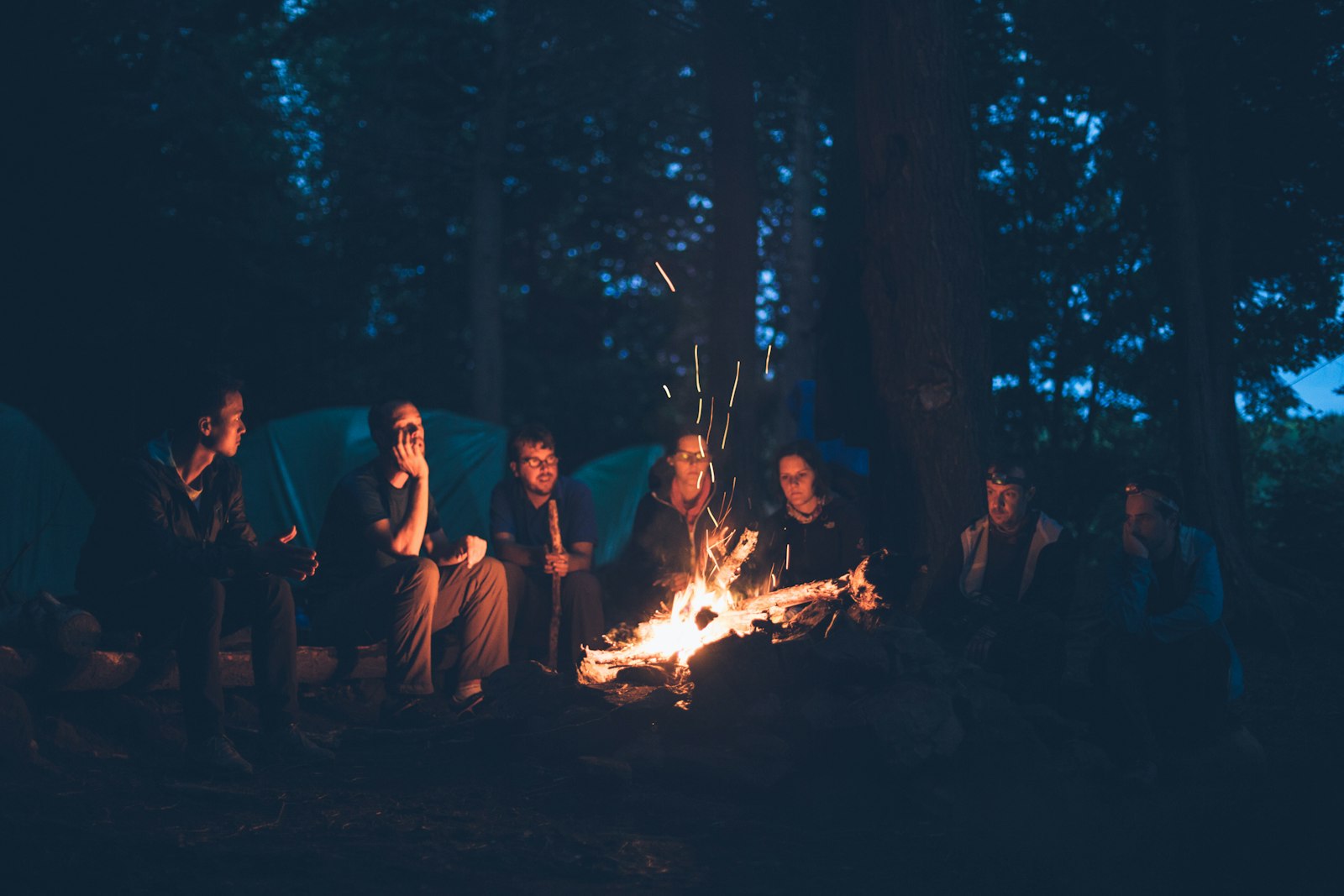
How to Plan a Group Camping Trip With Friends (Without the Group Chat Chaos)
Most group camping trips die the same way. Someone says "we should go camping" in the group chat. Three people thumbs-up it. Two weeks later, no dates are picked. Four weeks later, somebody asks who's bringing the stove. By week six the conversation has scrolled past, replaced by memes and dinner plans. Nobody decided not to go. The trip just quietly stopped being a thing.
The friction isn't the camping. It's the coordination. You have to pick a date that works for everyone, find a place, divide the gear, sort the food, agree on costs, watch the weather, and somehow keep all of that visible to a group of people who only check their messages when their phone buzzes. By the time the planning is done, the trip itself feels like the easy part.
This guide is the version of the plan that actually works. It's six stages, in the order they should happen, with the conversations to have at each one. You can read it in ten minutes and run a trip with it the same week.
Why most group trips fail before they start
Three things kill a group trip in the planning phase, and all of them are coordination problems, not camping problems:
- Decision drift. Nobody is responsible for picking the date, so nobody picks it. Everyone waits for someone else to commit first.
- Scattered information. The gear list is in a Google Doc, the dates are in iMessage, the campsite link is in a DM somebody forwarded, and the cost split is "we'll figure it out after." By the time the trip happens, half the group is operating on different facts.
- Unspoken assumptions. One person assumes the trip will be car camping with coolers; another is mentally packing for a backcountry overnight. Nobody catches the mismatch until the parking lot.
The fix isn't more communication. More group-chat messages make all three problems worse. The fix is fewer, better-structured decisions in a place everyone can see.
Stage 1: Pick the trip in 24 hours, not 6 weeks
The single biggest improvement you can make to group-trip planning is shrinking the front-end. The longer the planning conversation lasts, the more entropy creeps in: people lose interest, calendars fill, the original idea drifts.
The first 24 hours need to produce three things, in this order:
- One person who's organizing. Not a committee. A trip without a clear organizer becomes a trip nobody is organizing. Volunteer or appoint. The organizer doesn't have to do all the work — they just have to be the person who makes the call when the group can't.
- A rough shape. Two nights or three? Within driving distance or fly somewhere? Tents only or are we splurging on a cabin? You don't need details yet. You need a vibe everyone can react to.
- A target date window. Not "sometime in August." A two-weekend range, ideally the soonest realistic one.
Send those three things to the group as a single message, framed as a yes/no:
"I'm thinking three of us, two nights car camping, somewhere within three hours of here, weekend of June 14 or June 21. In or out?"
Yes / no replies are easy. Open-ended "what does everyone think?" messages are where trips go to die.
Stage 2: Lock the date before locking anything else
Date first. Always. Every other decision (where to go, what gear, who's coming) depends on which weekend you're holding. Locking the destination first and then trying to find a date for it is the most common way group trips disintegrate.
Two rules for picking the date:
- Pick the date that works for the most committed people, not for everyone. If you wait for a date that works for all eight people who said "I'm interested," you'll never find one. Pick the weekend that works for the four people who actually mean it. The others can come next time.
- Set a deadline for confirmations. "RSVP by Friday." Without a deadline, the soft-yes people drift. With one, they decide. Either answer helps you plan.
People who reply "maybe!" and then go quiet are the leading cause of cost overruns and gear gaps. Treat a non-answer by your deadline as a no. You can always add them back if they confirm later.
Stage 3: Pick a destination using a "good enough" filter
Spending two weeks comparing five campgrounds is how you turn a fun project into a chore. The trick is to use a filter that gives you a "good enough" answer fast, not the optimal answer slowly.
Start with three constraints:
- Drive time. What's the longest drive the group will tolerate after work on Friday? Be honest. Three hours feels different at 9 PM than it does on a map.
- Crowd level. Established campground with reservations and bathrooms, or dispersed camping somewhere quieter? The first is easier; the second is calmer.
- Bail-out distance. If it rains all weekend, how far is the nearest town with food and a roof?
Plug those three filters into your usual search (Recreation.gov, Hipcamp, your state park system, Reserve America) and pick the first option that meets all three. The second-best campsite that's available now beats the perfect campsite that fills up while you're still deciding.
Two practical notes:
- For most US public-lands camping, popular weekends book out 3–6 months ahead in summer. If you're inside that window, expand your destination filter or aim for a weekday-anchored trip.
- Always check fire restrictions before you commit. A no-fire weekend changes the trip's entire emotional shape — campfires are a load-bearing part of group camping.
Stage 4: Build a gear list calibrated to this trip
Generic camping checklists are why people overpack. A 50-item "everything you might need" list means everyone shows up with three sets of redundant cookware and nobody brings a headlamp.
The trick is to start from the trip you're actually doing — date, weather forecast, terrain, cooking plan, group size — and only list what this trip needs.
Sort the list into three columns:
- Group gear — things one person brings for everyone (tents if you're sharing, cook stove, fuel, cooler, water jug, lantern, first aid kit, a hatchet, a bear bag if you're somewhere that needs one).
- Personal gear — things every person brings for themselves (sleeping bag, sleeping pad, headlamp, water bottle, layers, rain shell, toiletries, plate + utensils).
- Food and consumables — meals for each day, snacks, coffee, fuel for the stove, water if you're not at a tap, wood if fires are allowed and not provided.
Then assign every group-gear item to one specific person, by name. Not "someone bring a stove" — "Maren is bringing the stove and one canister of fuel." Unassigned gear is gear that doesn't show up.
For deeper coverage of what to actually bring, see our first camping trip checklist — it walks through each category with specific items.
Stage 5: Sort costs in plain English (not three Venmo threads later)
The conversation no group ever wants to have, and the one that quietly poisons more friendships than any other part of camping. Sort it in advance, not after.
You don't need a spreadsheet. You need a one-paragraph agreement before the trip:
"Campsite is $48 split four ways. Food and group dinners I'll buy and we'll split when we're back — figure $40 each. Gas, whoever drives covers it; we'll round it up. Anything you bring for yourself (your own snacks, your own breakfast) is your own."
Three things to nail down before anyone shows up:
- What's shared and what's individual. Group dinners and campsite fees are usually shared. Personal beer and snacks are usually individual. Clarify the line before someone shows up with $80 of charcuterie expecting to be reimbursed.
- Who's fronting what. Reservation deposits and bulk grocery runs need someone to put the card down. Acknowledge it explicitly so the front-er isn't waiting awkwardly to bring it up.
- How the gear-owner gets credit. If one person owns the tent, the stove, and the cooler, they're effectively subsidizing the trip. Build that into the cost split. (We have a whole guide on this — see splitting costs fairly on a group trip.)
Stage 6: Build a one-page plan everyone can see
Everything above lives in one place. Not the group chat. The group chat is for vibes; the plan is for facts. They serve different purposes and they need to be in different places.
The plan needs four sections:
- The basics. Trip name, dates, who's going, where, drive time, link to the campsite reservation.
- The schedule. What's happening Friday night, Saturday, Sunday morning. Doesn't have to be tight — even a four-line "arrive 7pm Fri / hike 10am Sat / dinner 6pm Sat / pack out 10am Sun" gives the group a shared mental model.
- The gear assignments. Names against items. The stuff from Stage 4.
- The costs. Who's paying for what, how reimbursement works, what's individual.
Send the link to the group with one message: "Here's the plan. If something looks wrong, say so by Wednesday." Then stop running the trip in the chat. Run it in the document.
If a piece of trip information lives in five places, it's not in any of them. The group will trust whatever was said most recently in the chat — even if the document has the right answer. The fix is to make the document the place where decisions live, and to point people back to it whenever the same question comes up twice.
The week before: a pre-flight checklist
Five days out, run through these once:
- Confirm the reservation is still active and you have the confirmation number saved offline.
- Check the weather forecast and re-read the gear list against it. Forecast says lows in the 30s? Add a beanie and a warmer bag for anyone who packed light.
- Confirm fire restrictions are still what they were when you booked. Fire bans get added quickly in dry summers.
- Re-confirm everyone's coming. People disappear. Better to find out now than at the trailhead.
- Decide who's driving and what time the convoy is leaving. "I'll just meet you there" is the second-most-common cause of someone arriving four hours late.
The shape of a trip that goes well
A group trip that goes well doesn't feel like a logistical achievement. It feels easy. Everyone knows what's happening, when, with whom, and what they're responsible for. The campfire conversation isn't "wait, who's bringing the stove?" — it's about anything but the stove.
That ease is what good planning produces. You spend a few focused hours in week one so that you don't spend forty hours of group-chat archeology over the next month. The math is dramatically in your favor.
And once you've run a trip through this framework, the next one is faster. The campsite that worked, the gear list that was right, the cost split that nobody resented — those become the template for the next weekend. Group trips compound. Your fifth one is much faster than your second.