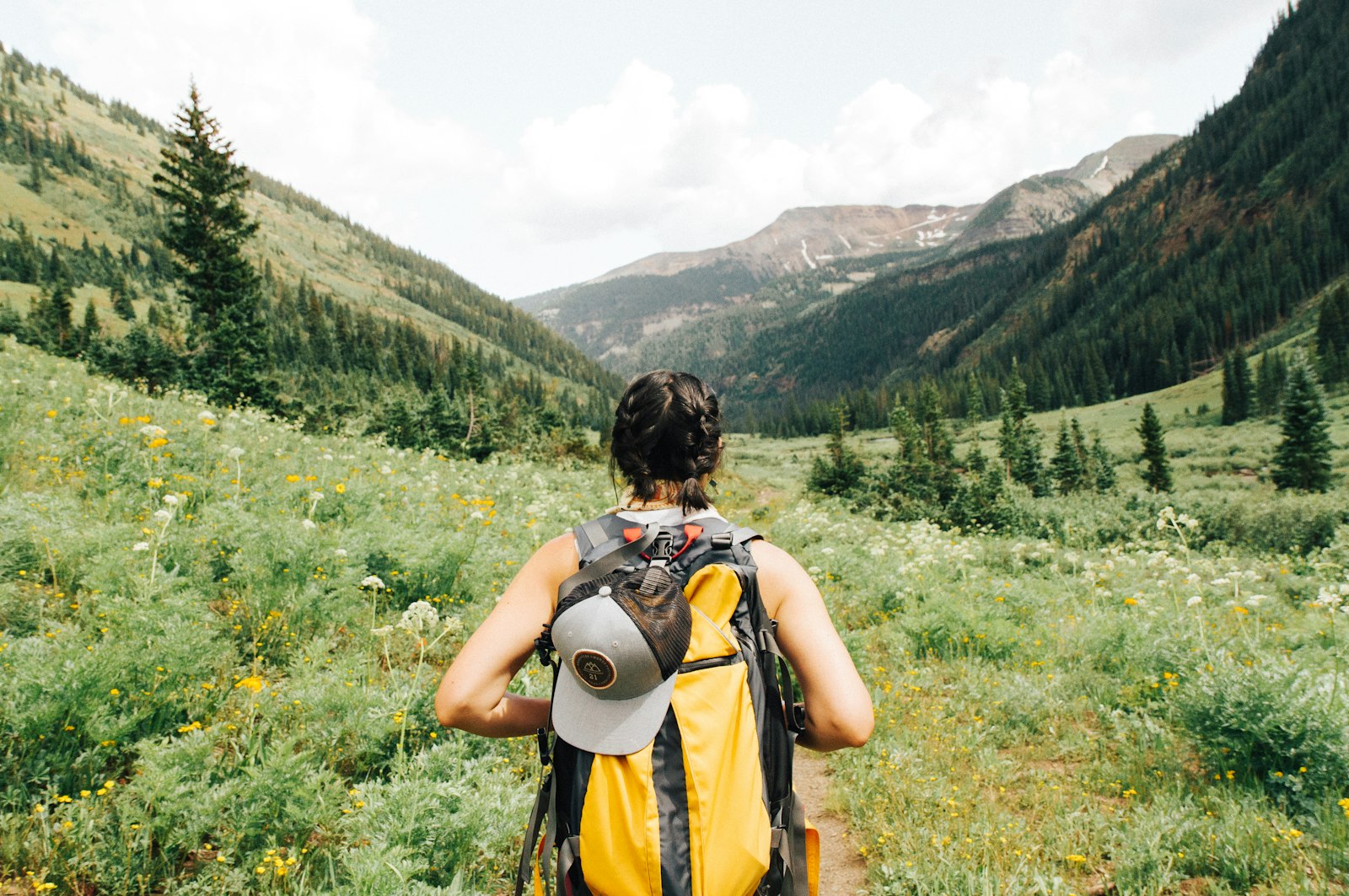
Beginner Backpacking Trips Within 3 Hours of Denver
Most "easy backpacking near Denver" lists are written for people who already backpack. They drop trail names without context, list elevation gains in a clinical font, and assume you know what "5 miles round trip with 1,200 feet of gain at 11,000 feet" actually feels like in your legs.
This is for the other audience. You've car camped a few times. You've done some day hikes. You're ready for your first trip where you carry your sleep on your back and stay overnight somewhere that isn't a campground. You want a real plan, not a list of trail names.
Trail conditions, fire restrictions, and permit systems near Denver change every season. Indian Peaks Wilderness, Rocky Mountain National Park, and most popular trailheads now require some kind of advance permit or reservation in the busy months. Treat any specific trail name in this guide as a starting point for your own research, not as a current-year recommendation. Always check the relevant land manager's website (US Forest Service, NPS, or state park) within a week of your trip for active closures and permit rules.
What "beginner-friendly" actually means at altitude
The Front Range is a punishing place to learn backpacking if you set the difficulty bar wrong. A "five-mile beginner hike" at 10,500 feet is a much harder day than a five-mile beginner hike at sea level. The altitude alone subtracts roughly 30% from the cardio capacity of someone who lives at low elevation.
For a first overnight, optimize for these:
- Total mileage under 6 miles round trip. Less if there's significant elevation gain.
- Net elevation gain under 1,500 feet. Anything more is fine for a day hike when you're carrying snacks; with a 30-pound pack on your back, the math gets harder fast.
- An obvious destination — usually a lake or a meadow with established camping nearby. Backpacking with no clear "we made it" point is psychologically harder than backpacking with one.
- A trailhead within 2.5 hours of where you live. The post-trip drive home is the hardest part of any beginner backpacking trip. Don't make it longer than it needs to be.
- An established trail with a pattern of beginner traffic. You want to see other backpackers on the trail, not be alone in the wilderness on your first night out.
The areas to look at
Three regions within three hours of Denver consistently produce beginner-friendly overnights. Each has dozens of trails; the goal here is to point you at the right region for your trip and let you do the trail-specific research from there.
1. Indian Peaks Wilderness (about 90 minutes northwest)
The most accessible serious mountain wilderness in the Front Range. Beginner-friendly options exist around the Brainard Lake / Mitchell Lake area, the Hessie / Lost Lake corridor, and the Monarch Lake side. Many overnight trips here are 3–5 miles in to a lake basin with established campsites.
The catch: Indian Peaks requires a backcountry zone permit for overnight stays from June 1 to September 15. They book months in advance for popular zones (Brainard, Crater Lake, Diamond Lake) and can be impossible to get on weekends in summer. Plan early or aim for the shoulder season.
Good for: lake-basin first trips, a real "we're in the alpine" feel, beginner mileage with serious scenery.
2. The Lost Creek Wilderness (about 90 minutes southwest)
Lower elevation than Indian Peaks (closer to 9,000–10,500 feet vs. 10,500–11,500), which makes it noticeably easier to acclimate to. Smaller crowds. Distinctive granite-dome scenery. Good for first overnights because mileage and elevation are both more forgiving than the higher-elevation alternatives.
The catch: Trailheads can require longer drives on dirt roads. Confirm road conditions and your vehicle's clearance.
Good for: a quieter first trip, easier acclimation, a forest-and-meadow aesthetic instead of strictly alpine.
3. The northern Sangre de Cristos / Wet Mountains (about 3 hours south)
If you're willing to push the drive a bit, the area around Westcliffe and the South Colony Lakes corridor offers beginner overnights with dramatic scenery and meaningfully smaller crowds than the Indian Peaks area. Some trails climb fast; others stay forgiving for the first 3–4 miles.
The catch: The drive eats into your weekend, and you want to avoid the harder approaches (the high Sangre Cristo trailheads aren't beginner-friendly). Choose trails carefully.
Good for: a quieter alternative when Indian Peaks permits are unavailable, mountain scenery without the Boulder-area trailhead crowds.
What about Rocky Mountain National Park?
Tempting (it's the biggest name in the area), but in practice RMNP is one of the harder places to do a first backpacking trip. Backcountry permits require advance reservation through Recreation.gov, are highly competitive, and carry per-person nightly fees. Some zones require specific bear canisters. Trailhead parking fills before sunrise on summer weekends. The trails themselves are wonderful but the system around them is the most rule-heavy in the region.
For a first overnight, the Indian Peaks Wilderness next door delivers similar scenery with a less complicated permit experience. Save RMNP for a later trip when you've already got the basics down.
Picking the right trip for your fitness
The single best filter for a first overnight: can you do the round-trip distance as a day hike, with a daypack, without getting wrecked?
If a 6-mile round trip with 1,200 feet of gain is hard but doable as a day hike at altitude, that same trip with an overnight pack is a good first backpacking distance. If it's already pushing your limits as a day hike, reduce the mileage by a third before adding the pack.
The pack itself is roughly 25–35 pounds for an overnight (sleeping bag, pad, tent or shelter, food, water, layers, stove). It changes how you climb. Plan to be slower than your usual hiking pace by 25–40%.
The gear that's different from car camping
If you've car camped before, your kitchen-sink approach won't work. Backpacking is the discipline of subtraction.
- A real backpacking pack (50–65L is the right size for a first trip). Borrow if you can; the right pack makes everything else feel easier.
- A lightweight tent (3–5 lbs). Borrow this too if possible. A car-camping tent is too heavy.
- A sleeping bag rated 10°F below your forecast low. At Front Range elevations, even July nights can drop into the 30s. Don't bring a 50°F bag and hope.
- A real sleeping pad, not a foam yoga mat. Insulation against the ground matters more than padding for comfort.
- A small canister stove and one pot. That's it for cooking. Skip the two-burner.
- A water filter or a small chemical treatment. You'll be filling from streams; bring something rated for backcountry use.
- A bear canister or bear bag if you're in a zone that requires one. Indian Peaks does in some zones; many RMNP zones do too.
Our first camping trip checklist covers the fundamentals; for backpacking specifically, the constraint is weight. Every item earns its place by being one of: necessary for safety, necessary for sleep, or so light it's not a meaningful tradeoff.
Permits, reservations, and the rules that change every year
This part is genuinely annoying and is the biggest reason a beginner backpacking trip falls apart. Get ahead of it.
- Indian Peaks Wilderness: backcountry zone permits are required June 1 – Sep 15. Book through Recreation.gov; popular zones release on a rolling basis and go fast for summer weekends. Off-season (early June, late September) is easier.
- Rocky Mountain National Park: backcountry permits are required year-round, more competitive, more expensive, and have stricter rules per zone. A timed-entry day-use reservation is also required for the park itself in summer.
- Lost Creek Wilderness, most national forest dispersed camping: typically no advance permit is required, but you should still check the relevant ranger district for active fire bans, group-size limits, and any temporary closures.
- Fire restrictions: the Front Range gets fire bans imposed and lifted constantly through the summer. Always check within a few days of your trip. A "campfire under the stars" assumption that turns out to be wrong is a real morale hit on night one.
Plan to start your permit research at least a month before your target weekend, ideally three.
The shape of a good first overnight
Here's what a well-designed first trip looks like in practice:
- Drive to the trailhead Friday evening, sleep in the car or at a nearby pull-off (legal sites only — many are not).
- Hike in Saturday morning, 3–5 miles, arrive at your campsite by early afternoon. You'll be slower than you expect; that's normal.
- Set up camp, eat, explore the area without your pack on, watch the alpine evening do its thing, sleep early. The altitude and the day's effort will catch up with you fast.
- Wake up, eat, pack down, hike out Sunday morning. Coffee in the parking lot. Drive home with the windows down.
The trip is not the place to test your limits. The trip is the place to learn what backpacking actually feels like in your body, how your gear handles a real night out, and whether the people you're with are the ones you want to do harder trips with.